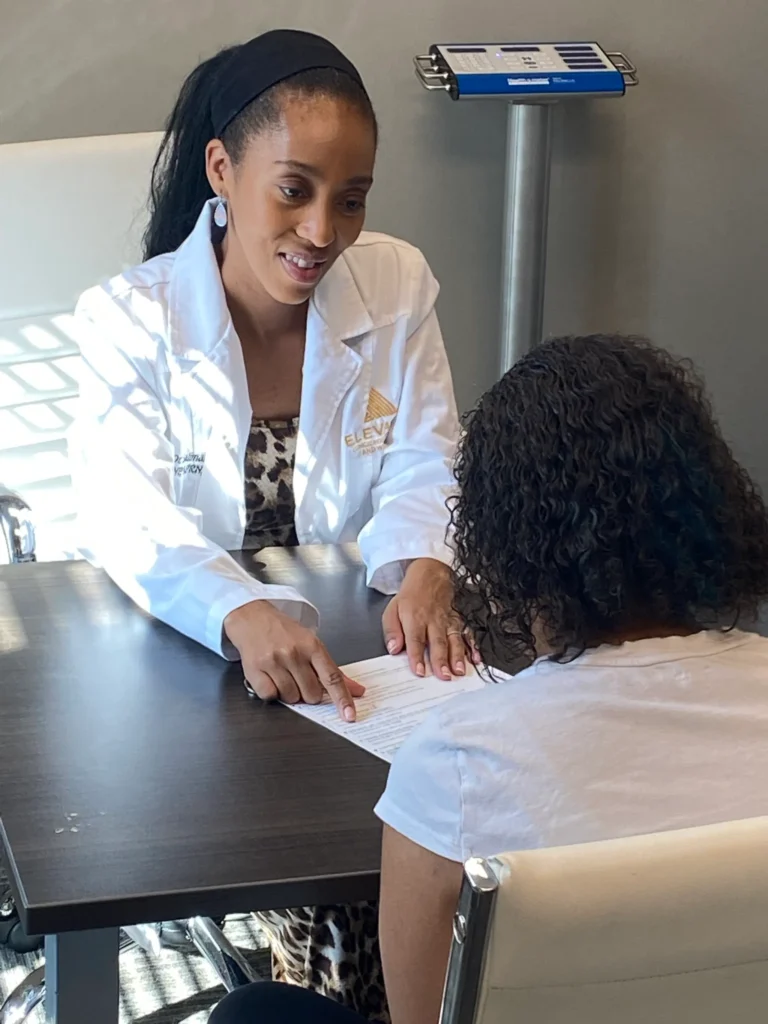
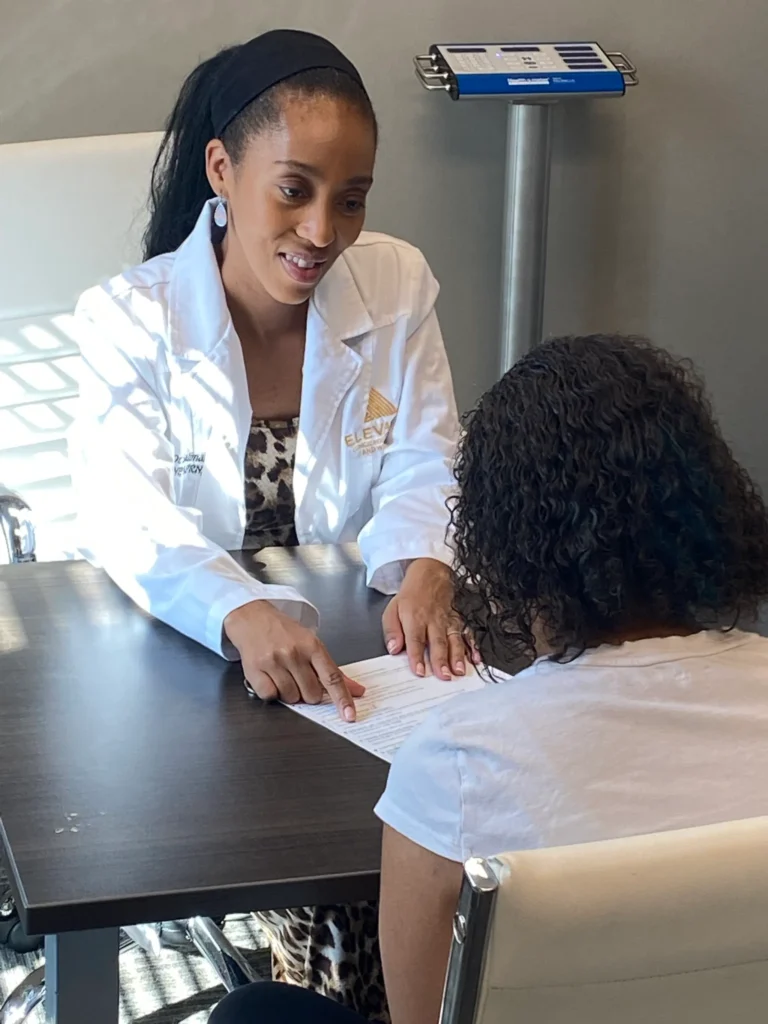
If you’re looking into peptides for gut health, skin, or recovery, you may have come across the KLOW stack. It is commonly described as the GLOW stack: GHK-Cu, BPC-157, and TB-500-combined with KPV. The idea is to discuss gut-support and inflammatory-balance goals alongside skin and tissue goals. The name can make KLOW sound like a standard, ready-made treatment. It isn’t. Formulations and clinical suitability can vary, and a peptide combination is not a substitute for finding out what may be causing your symptoms. I’m Dr. Salimah Jones. My approach is to start with you: your health history, symptoms, goals, and any evaluations that may be appropriate. If you’re searching for a KLOW stack near me, I encourage you to begin with a conversation, not assumptions about what a peptide can or cannot do. What is the KLOW stack? KLOW is generally used to refer to four peptides: KPV, included in discussions about gut-support and inflammatory-balance goals GHK-Cu, often discussed in relation to skin and tissue goals BPC-157, often discussed in relation to tissue and recovery goals TB-500, also commonly discussed in relation to tissue and recovery goals KLOW is sometimes explained as GLOW plus KPV. The “GLOW” portion refers to GHK-Cu, BPC-157, and TB-500; adding KPV is intended to bring gut-support goals into the conversation as well. That description explains how the stack is discussed, not what it will do for an individual. The name alone doesn’t tell us whether it’s suitable for you, what a particular formulation contains, or whether it aligns with your health needs. Why This Matters: One stack can involve different goals Gut symptoms, skin concerns, and recovery needs can have different causes. Putting several goals under one label doesn’t replace careful evaluation. When someone asks me about KLOW, I want to understand what they’re hoping to address. Is the main concern ongoing digestive discomfort? Skin changes? Recovery after an injury? It matters whether symptoms are new, persistent, changing, or affecting daily life. The next step should reflect the concern, not just the peptide name. My functional medicine approach looks at health history, symptoms, and relevant factors together. The goal is to help you understand your options and make a decision with appropriate clinical guidance. Gut symptoms deserve a proper evaluation People searching for gut health peptides in Gallatin, TN may be looking for support with bloating, discomfort, irregular bowel habits, or other digestive concerns. Those symptoms can have many possible explanations. A peptide conversation should not replace an evaluation to understand what may be behind them. Before discussing a peptide option, I’d want to hear about the symptoms themselves, when they began, how often they occur, and whether anything makes them better or worse. Depending on the situation, a clinician may recommend additional assessment or referral. A peptide stack should not be used as a reason to delay care or stop a treatment plan without speaking with the clinician who manages it. Seek prompt medical care for serious or worsening digestive symptoms, especially severe abdominal pain, blood in your stool or black stools, persistent vomiting, signs of dehydration, fever with significant symptoms, or unexplained weight loss. If symptoms feel urgent, contact emergency services or go to an emergency department. KPV is the addition that distinguishes KLOW from GLOW, and it is often brought up in gut-support discussions. That does not mean it diagnoses or treats a digestive condition. A careful conversation should make room for what you’re experiencing and for other appropriate care. Skin and recovery goals are individual, too The other peptides in KLOW are commonly discussed in connection with skin, tissue, and recovery goals. But a hoped-for benefit is not a promise of a result. Skin concerns and recovery needs can be influenced by many personal factors, and a single stack may not be the right fit for everyone. If your goal is skin health, we can discuss your concerns and how they relate to your overall care. You can also learn about our skin peptide consultations and aesthetic services. If you’re focused on recovery, we’ll consider the concern in context and discuss whether other evaluation or care is appropriate. What to discuss before considering KLOW A free consultation can help you ask questions and get clearer on whether a peptide discussion makes sense for your goals. It’s also a chance to share your medical history, current medications and supplements, allergies, and any existing care plan. Questions you may want to bring include: What is the main goal I want help with? Have my symptoms been properly evaluated? What does this specific peptide discussion involve? What benefits are realistic, and what is uncertain for my individual situation? Could this option conflict with my health history, medications, or other care? What other approaches might be appropriate? I want patients to feel informed, not pressured. If a peptide isn’t a suitable option, that’s important to know too. Any plan should be individualized, and no one should assume that the KLOW name guarantees a specific formulation, outcome, or experience. Looking for peptide therapy in Hendersonville, TN? At Elevated Contouring Hydration and Weight Loss, we serve patients in Gallatin, Hendersonville, and across Middle Tennessee. If you’re searching for peptide therapy in Hendersonville, TN or nearby, you can start with a conversation about your goals and questions. Our virtual care services are available to patients in Tennessee. A consultation is a starting point for education and clinical discussion. It is not a promise that a particular peptide or stack will be recommended. Your needs, medical history, and appropriate care options guide the conversation. Schedule a free peptide consultation with Dr. Salimah If you’re curious about the KLOW stack, GLOW plus KPV, or other peptide options, I invite you to book a free peptide consultation with Dr. Salimah to see if peptides are right for you. We can discuss your goals, review your questions, and help you understand possible next steps, without pressure to commit. Book your free virtual peptide consultationPrefer to call? 615-239-7270 This article is for